
1
/
of
1
Simon and Schuster
What the Body Means to Say
What the Body Means to Say
Regular price
$14.99 USD
Regular price
Sale price
$14.99 USD
Unit price
/
per
Couldn't load pickup availability
What if illness is one of the ways the self speaks? Blending psychology, spirituality, and personal story, an evolutionary biologist and priest explores what our wounded bodies can teach us about belonging, meaning, and the possibility of wholeness. For readers of Lulu Miller, Rachel Aviv, and Sabrina Imbler.
“How can you be both an evolutionary biologist and a person of faith?” people often ask me. “How can I not be?” I want to respond.
When a woman set herself on fire in an attempt to draw closer to God, hospital chaplain Emily Boring is called her bedside to help deal with a psychiatric crisis. Instead, she encountered a question that would transform her understanding of illness, suffering, and the self.
At the same time, Emily was quietly being consumed by anorexia, an illness that left her caught between survival and self-destruction, grappling with what her physical body was trying to say about her spiritual suffering. As she searched for a way forward, she found herself moving across unlikely terrain: hospital wards and research laboratories, coral reefs and church pews, neuroscience journals and centuries-old spiritual texts. Everywhere she looked, she encountered the same mystery: Why do human beings so often express their deepest longings through the body?
In What the Body Means to Say, Emily follows the hidden conversation between body and soul. Drawing on her experiences as an evolutionary biologist, Episcopal priest, hospital chaplain, and rehab patient, she explores what illness, addiction, trauma, grief, and other forms of woundedness can reveal about our shared need for meaning, belonging, and connection.
Along the way, she meets parishioners and fellow patients searching for transcendence, studies organisms that blur the boundaries of individuality, and discovers surprising resonances between the language of biology and the language of faith. What emerges is a radically expansive vision of selfhood—one that refuses to separate the physical from the spiritual, the scientific from the sacred.
In the tradition of Rachel Aviv’s Strangers to Ourselves and Lulu Miller’s Why Fish Don’t Exist, this book blends memoir, science, and philosophy to ask some of life’s most enduring questions: What does it mean to be whole? How do we make meaning of suffering? And what becomes possible when we learn to listen to what our bodies have been trying to tell us all along?
Materials
Materials
Shipping & Returns
Shipping & Returns
Dimensions
Dimensions
Care Instructions
Care Instructions
Share
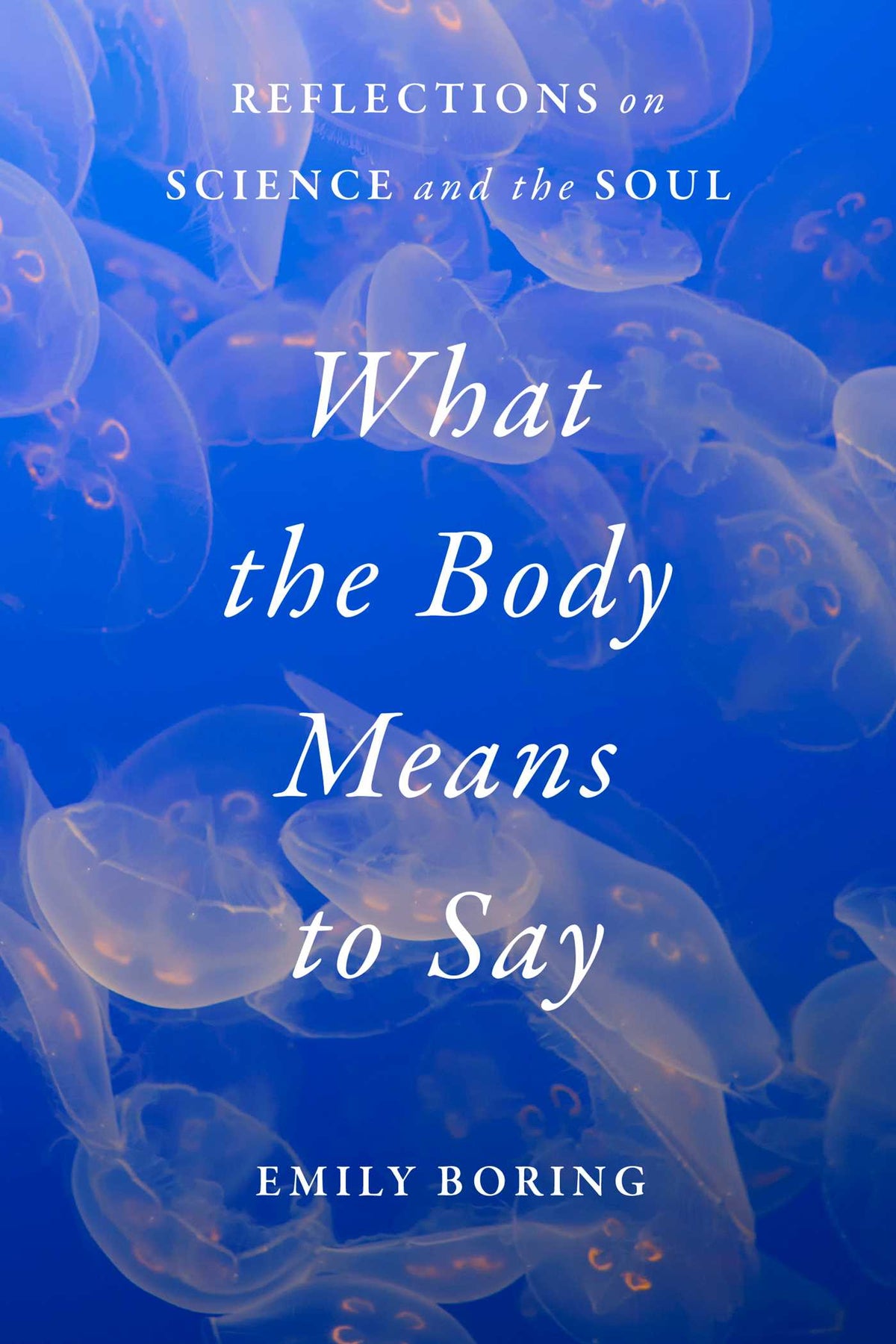
Image with text
Pair text with an image to focus on your chosen product, collection, or blog post. Add details on availability, style, or even provide a review.
-
Free Shipping
Pair text with an image to focus on your chosen product, collection, or blog post. Add details on availability, style, or even provide a review.
-
Hassle-Free Exchanges
Pair text with an image to focus on your chosen product, collection, or blog post. Add details on availability, style, or even provide a review.